

Beans to Cup Coffee Machine
Bean to cup machines provide convenience and quality as well as versatility for those who prefer coffee with milk such as lattes, flat whites, or cappuccinos. They can help reduce unnecessary coffee purchases, and can increase productivity and satisfaction of staff.
These commercial coffee machines are fully automated, allowing users to choose and enjoy their desired beverage at the touch of one button. However, they still require regular cleaning and descaling to keep them working at their best.
The grinder
The coffee grinder is an equipment used to grind whole beans into coffee that can be used to make coffee. Most modern bean-to-cup machines feature a built-in grinder to save you time and effort, not to mention the hassle of preparing the beans before making coffee. The grinder is either a blade or burr type. Most offer different grind settings to suit different methods of brewing. The art of choosing the correct grind setting can be a struggle. Too coarse a grinding can result in a bitter cup while too fine a grind might not extract the full flavour.
The main advantage of using a grinder is that you get fresher, more flavorful coffee. Coffee that is ground and brewed earlier loses a lot of its natural flavor and aroma because of the oils in the beans being exposed to oxygen. This is why many coffee lovers recommend freshly ground beans as the only way to make an excellent cup of coffee.
There are those who worry that coffee beans that have been ground prior to purchase are more likely to becoming stale. This can dull the flavor and make it more bitter. The majority of people prefer buying pre-ground coffee, rather than investing in an electric coffee grinder to use at home. machine.
It is possible to use a food processor to grind your own beans, but their motors aren't designed to work with hard ingredients like coffee beans. As such, they're not able to create consistent grind sizes. Alternatively, you can use the mortar and pestle. However, the grinding process can be quite long and you may end up over-grinding a portion of the beans, which can alter the consistency and quality of your drink.
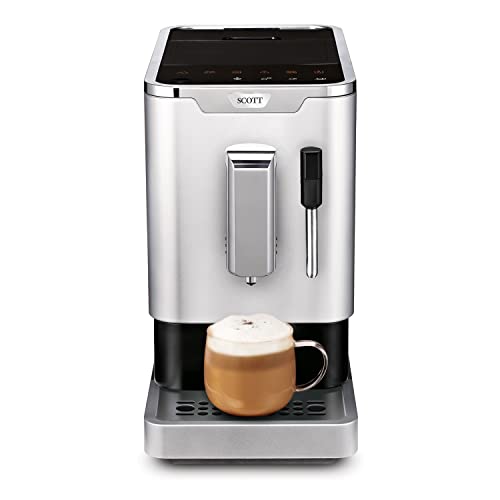
Automated grinders come with an hopper that you can fill up with the coffee you require for your brew, and then operate by pressing a button. Some grinders have a visual indicator that shows when the bin needs to be empty. It is crucial not to leave the ground coffee in the machine for more time than you'll need.
The brewing unit
The brewing unit is responsible for compressing ground coffee into a puddle that water can push through. The resulting cup of coffee is dispensing from the coffee maker. The brewing unit is a complex piece of machinery that functions to ensure the best possible outcomes every time you use your bean-to-cup machine. It is essential to ensure that the brewing unit is free of debris and other issues. The good news is that most bean-to-cup machines come with a built-in water system that makes cleaning the brewing unit easier than ever.
The majority of coffee machines can make different types of beverages such as lattes and cappuccinos. bean to cup coffee makers let you customize your beverage according to your taste and strength preferences. Some even come with a touchscreen display that allows you to make changes in a flash. These options can save you lots of time and money.
To prevent the brewing unit from jamming, present invention provides an assembly of valves inserted between the chamber of brewing and the beverage outlet. The valve assembly is moved by springs from a beginning position where the valve member doesn't completely close the seat, but leaves a minimal gap, to a second position where it completely closes the seating. This mechanism can be used in automatic coffee machines for home and office use, as well as in food-service sites or so called HoReCa (Hotel-Restaurant-Cafe) sites or in public areas.
When the brewing unit is in stand-by mode and the second piston 6, coupled to the first piston 5, stands separated from the delivery outlet surfaces and the valve assembly 13 isn't exposed to the adhesion of hard residues to the delivery outlet surface. The coffee beverages that exit the brewing unit are also used for cleaning of the surfaces of the delivery outlet and of the valve body of soft residues.
During the preparation process the second piston 6 is moved back to its initial position using the extended resilient elements and, in this position, the coffee powder can be dropped into the chamber of brewing. The wall that is movable at the end of the first piston can be pushed against the coffee in the brewing chamber.
The water system
Bean-to cup machines are perfect for those who appreciate a good cup of coffee but do not want to bother with grinding and tapping. They use hot water to brew espresso, creating a rich dark, black cup of coffee. Some models also include a milk dispensing system, so you can add steamed and foamed milk to your drink should you wish. This can be either automatic or manual, based on the model you select.
Bean-to-cup machines make use of freshly ground whole beans that are ground just prior to the brewing. This preserves the flavour and makes a better cup of coffee. This is different from automated machines that use pre-ground beans which lose flavour and go more stale after being ground just once.
The water system on a bean-to-cup machine includes an heating unit, tank and pump. The tank is where the water used for making brewing is stored. It is essential that the tank is kept clean and filled with fresh water in order to get the best results. The heating unit is in charge of bringing water to the right temperature for brewing, while the pump keeps the pressure throughout the process. Certain bean-to-cup equipments have an inbuilt water filter to avoid scaling and keep the coffee fresh.
Lastly, the control panel on a bean-to-cup machine controls all the processes and settings. This is where you set how strong, how sweet or how much milk your coffee should contain, and the type of brew you want. Many models offer customizable options that make it easier and quicker for you to drink your favorite coffee every time.
As everything happens inside the machine there's no need for paper filters or plastic cups, and it's more environmentally friendly than the majority of coffee makers. Additionally, bean-to-cup machines are a great investment for businesses, negating unnecessary coffee purchases and ensuring staff and customers can access high-quality coffee at the click of the button.
The control panel
A bean-to cup coffee machine is an appliance that simplifies brewing a cup of delicious, fresh coffee. These machines combine brewing and grinding into one unit, and provide various options for customization for each drink. They ensure that the full flavor and aroma is retained by grinding the whole beans prior to brewing. In addition, these machines are able to offer many beverage options and features including adjustable settings for the size of the grind and temperature of the water.
Bean-to-cup coffee machines are available in a range of prices, ranging from budget-friendly models to premium options designed for commercial use. Whatever the price the majority of coffee makers come with several key components that must be in sync to create an excellent cup of coffee. Understanding these crucial elements can help consumers make an informed decision when choosing a coffee machine for their office or home.
The control panel is an integral part of every coffee maker. It controls the way the machine functions. The control panel is where you choose the type of coffee and adjust the strength. Many coffee makers have digital displays or touchscreens that allow you to easily navigate through the various options. The more expensive coffee machines may come with programmable recipes that allow you to personalize your experience even further.
Another important feature of the control panel is the brewing indicator. This will let you know how the brewing process is progressing and if the machine needs to be reset. This will also let you know if the machine has an error, such as a full water tank or a lack of beans.
The control panel is at the heart of your bean-to-cup machine. It comes with a range of options. The simplest machines are equipped with basic manual controls, while more advanced models offer the ability to program recipes and smartphone application integration. Some coffee machines are equipped with automatic milk texturizing system to create a professional-quality cappuccino or latté. Other models come with a variety of different coffee strengths, including mild, medium, or strong. Some models come with a coffee filter that can be reused, which eliminates the need to throw away filters.